
Huron County Sex Offender Checks
The main public channel for a Huron County sex offender lookup is the free Michigan Public Sex Offender Registry, or PSOR, managed by the Michigan State Police. It offers several paths into the same publishable statewide data: name, registration or MDOC number, street, city, county, ZIP code, and a neighborhood map. Quick lists also separate all published profiles, incarcerated registrants, and people marked non-compliant. The public system may be unavailable at times, so a searcher should keep the state contact and local reporting options in mind.
Begin with the strongest identifiers available. A full name and date of birth on the resulting profile are more reliable than appearance alone. For an area check, enter a Huron County address and select a radius rather than assuming a city-name search captures nearby rural addresses. The registry is a current public subset, not a full criminal-history report. The convicting court file supplies the charge, judgment, and sentence context behind a listed registration offense.
Michigan Registry Guidance for Huron County
Michigan State Police explains what PSOR publishes, what it excludes, and how residents can use alerts. The official MSP registry guidance is the best place to confirm current service rules before interpreting a Huron County result.
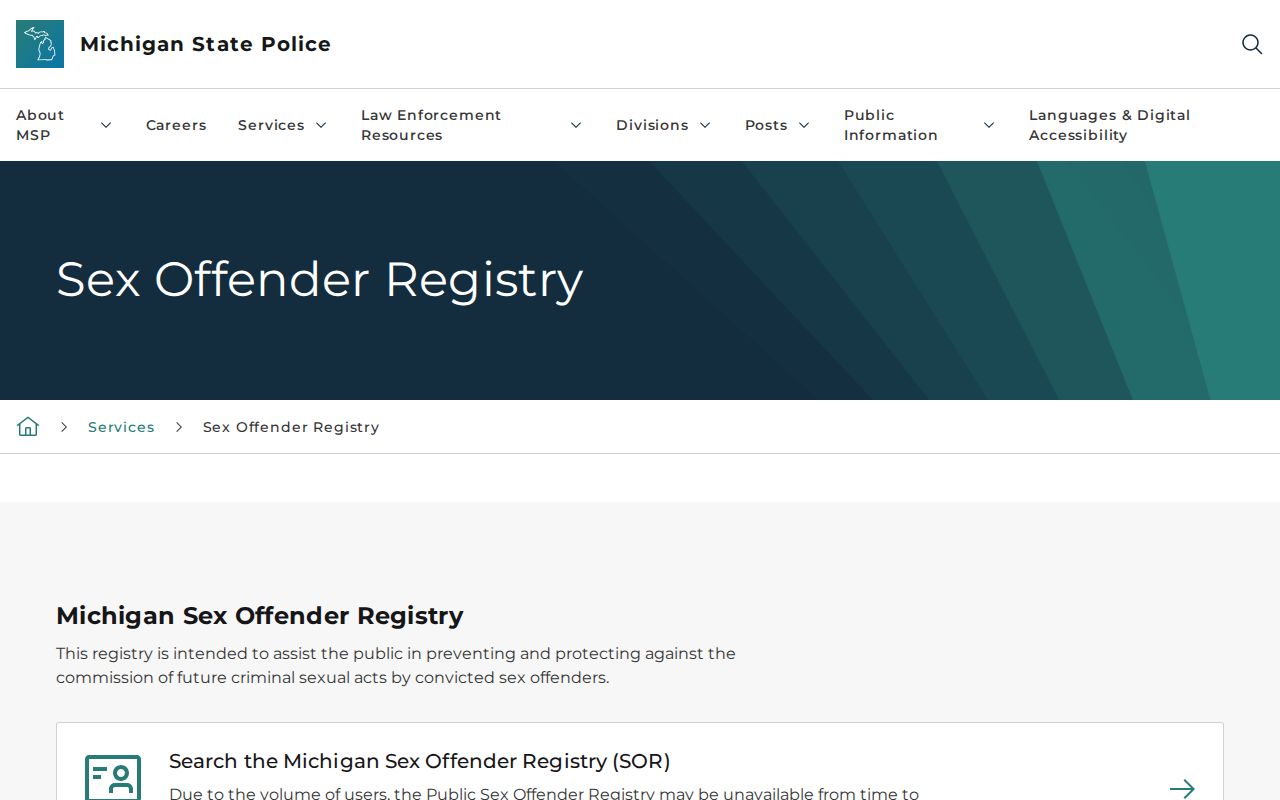
The guidance matters because a missing public profile does not prove that no past adjudication exists. Juvenile adjudication, a nonlisted offense, death or nonresidence, court removal, a qualifying set-aside, HYTA treatment, completion of the registration term, and other statutory categories can affect public display.
Michigan Public Sex Offender Registry Searches
The Michigan PSOR accepts either person-based or place-based inputs. It allows partial first and last names, an alternative identifier, and geographic filters that can narrow results to Huron County. Read the conditions of use, choose the route that fits the facts known, and then compare profile details rather than treating the first similar name as a match.
- Open PSOR and review its current conditions and search choices.
- Enter both first and last name, an identifier, or a Huron County address, city, ZIP, or county filter.
- Compare name, age, image, address, aliases, and status across the result list.
- Open the full profile and read the offense, registration, compliance, vehicle, campus, and map fields in context.
| Field Label | Type | Required | Notes |
|---|---|---|---|
| First and Last Name | Text | Both for name search | Partial names are allowed. |
| Registration # or MDOC # | Text | For identifier search | Alternative to a name query. |
| Street | Text | No | Use with city, county, or ZIP for an area search. |
| City, County, ZIP | Text or dropdown | No | Select Huron County or a local place to narrow results. |
| Neighborhood Map and Radius | Map and dropdown | Address for map search | Choose .25, .50, 1, 2, or 5 miles. |
| Quick Lists | Controls | No | All published, incarcerated, or non-compliant profiles. |
The PSOR search interface shows the public controls used for both Huron County name and map checks.
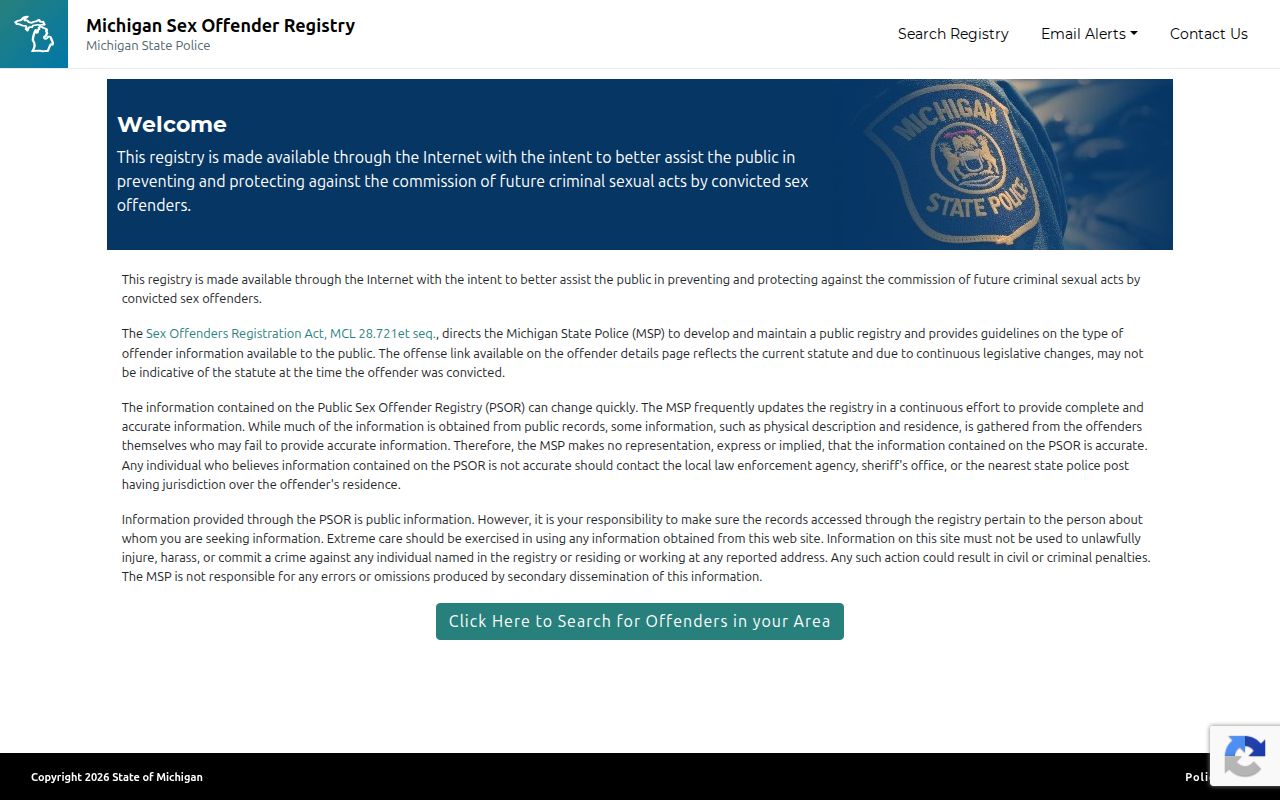
Those controls let a resident shift from a narrow identity query to neighborhood awareness without using a third-party data source.
Huron County Map and Email Alerts
The neighborhood map accepts an address and a radius from one-quarter mile through five miles. This is useful in Huron County, where a mailing city or ZIP may cover more ground than a town boundary suggests. A map marker can be unavailable when the published address cannot be mapped, so a blank map position should not override the text status and address shown on a profile.
PSOR offers two different notification tools. “Track Offender” asks for an email twice, acceptance of the terms, and registration. It reports changes such as moves, work, or school information for a selected profile. Neighborhood alerts instead pair a home address and email with a chosen radius. The published process requires confirmation of the email within 24 hours. These are change notices, not real-time surveillance, and unregistering an email cancels all tracked profiles and locations tied to it.
Registry Profiles: What They Show
A Huron County registry profile combines identity, registration basis, reported location, and current administrative status. The offense entry identifies why registration applies; it is not a new accusation. Victim identity is never a public profile field, and readers should not try to infer it from offense details. Compare multiple identifiers because photographs age and two people can share similar names.
| Name & Aliases | Current legal name and published alternate names for identity matching. |
|---|---|
| Photo & Physical Description | Image, age or birth information, and published scars, marks, or tattoos. |
| Registered Address | Street, city, ZIP, county, campus, and map detail where the portal can map it. |
| Offense & Statute | Qualifying offense description, statute, and conviction information that form the registration basis. |
| Registration Number & Tier | Official registry identifier and offense-based Michigan tier. |
| Vehicle & Campus | Published vehicle, school, or work-related registration fields where applicable. |
| Status & Compliance | Labels such as Active, Incarcerated, Absconder, or Homeless plus specific compliance categories. |
Michigan’s registry publication law, MCL 28.728, controls the public information represented in the official profile layout.
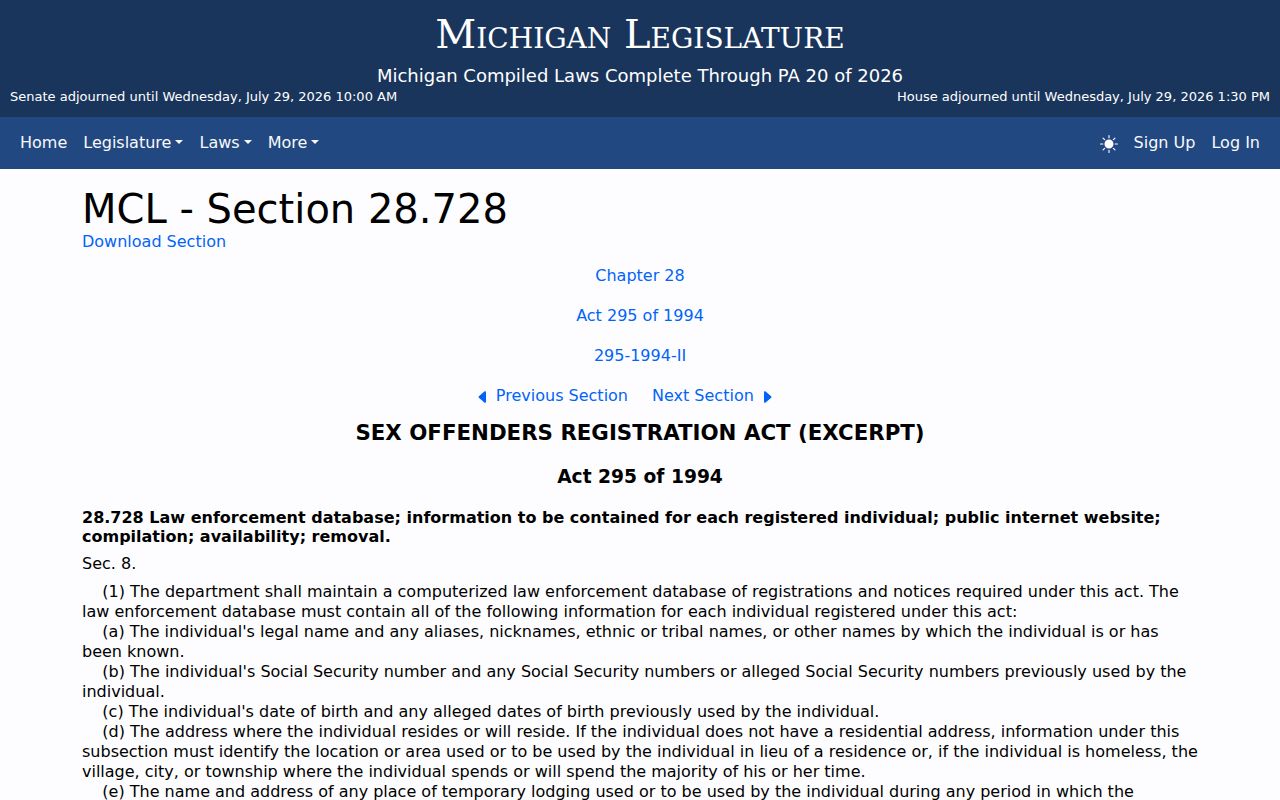
Reading the fields as one identity record, rather than focusing on a photo or one label, reduces the risk of a mistaken match.
Reading Huron County Status and Compliance
PSOR separates status from compliance. “Active” means the registrant resides in Michigan; it does not report a new offense. “Incarcerated” shows present Michigan incarceration. “Pending Out of State” describes a move in progress before the receiving jurisdiction’s duties are settled, while “Inactive Out of State” can still apply to a nonresident who works or studies in Michigan.
“Absconder” means whereabouts are unknown after departure from the reported address. “Homeless” means there is no fixed or temporary residence. “School Only” and “Employment Only” describe why a nonresident still reports Michigan activity. Compliance flags may concern address, campus, registration, verification, fees, forms, identification, telephone, or vehicle reporting. A flag identifies the registration category at issue, not proof of a separate conviction.
Registration Levels and Duties in Michigan
Michigan uses offense-based tiers rather than an individual prediction of risk. MCL 28.725 generally links each tier to a registration term and an in-person verification schedule, subject to statutory exceptions and current court orders. Tier should therefore be read as a legal category attached to the offense and registration law, not as a score that predicts what a person will do.
| Level / Tier | Duration | Verification Frequency |
|---|---|---|
| Tier I | Generally 15 years | Annual verification |
| Tier II | Generally 25 years | Semiannual verification |
| Tier III | Generally life | Quarterly verification |
Michigan law also provides an initial $50 fee and a $50 annual fee, with an aggregate cap of $550. Verification timing follows the tier or offense and birth-month scheduling. Changes in residence, employment, campus, telephone, vehicle, or other reportable information have their own statutory reporting duties, so the profile’s status and compliance fields can change between scheduled verifications.
Huron County PSOR Versus NSOPW
PSOR is the direct Michigan source for Huron County address, profile, map, alert, and compliance information. When a search involves a move across state lines, the U.S. Department of Justice National Sex Offender Public Website adds a federated search across participating jurisdictions. It does not replace the underlying state record, and each jurisdiction still controls what its public registry displays.
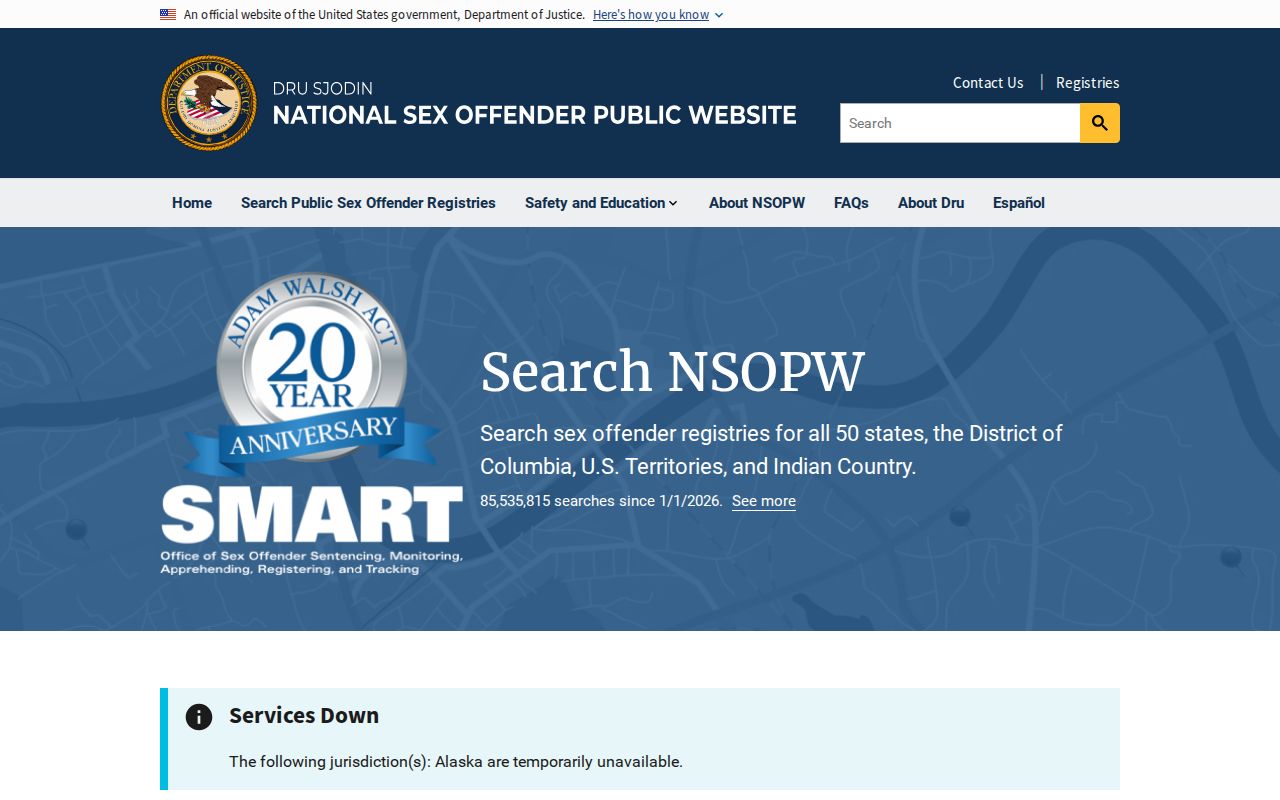
The national interface is most useful as a second layer when someone may have left Michigan. Return to the source jurisdiction for the detailed profile and its current status terms.
Why Huron County Searches Can Miss History
A public search shows only the current publishable Michigan subset. It is not accurate to assume all Tier I profiles are hidden or all Tier III profiles are visible. Public display depends on the amended statute and the facts of the record. MSP identifies several possible reasons for nonappearance, including a juvenile adjudication, death or nonresidence, a nonlisted offense, certain history before October 1995, court removal, a qualifying set-aside, HYTA treatment, a completed registration duration, or specified single-offense categories.
When the county of conviction is unknown, MSP recommends an ICHAT search by name and date of birth. ICHAT charges its ordinary search fee and carries its own exclusions, so it is a separate criminal-history source rather than a hidden-registry lookup. A public court file may give the clearest context for a known qualifying offense, including the judgment and sentence.
Report Huron County Noncompliance Safely
If a profile appears factually wrong, use the portal’s Submit a Tip route or contact the registration agency. Suspected violations should go to the law-enforcement department where the person actually resides. The Michigan State Police registry staff line, 517-241-1806, handles system and record questions. Huron County residents may also contact the Sheriff at 989-269-6500 when that office is the relevant local agency.
Do not investigate by approaching a listed person or household. Give the agency the profile identifier, the specific field that appears wrong, and the facts supporting the concern. Law enforcement can compare nonpublic registration information and decide whether follow-up is required. Michigan’s former statewide student-safety-zone geographic restriction was repealed, so no blanket claim that every registrant is barred from living within a fixed distance of every school or park should be made without a current law or local ordinance.
Using Registry Information Lawfully
Michigan publishes PSOR information for public safety and community awareness under MCL 28.721 et seq. Huron County residents may use the map, profile tracking, neighborhood alerts, local law-enforcement reporting, and NSOPW to make informed personal and family safety plans. Publication does not authorize anyone to expose victim identity, threaten a registrant, target a household, interfere with lawful activity, or treat an offense-based tier as a personal risk forecast.
Misuse is a crime: MCL 28.734 prohibits using Michigan registry information to commit a crime or to harass or intimidate a registrant or another person. Report a concern to law enforcement and do not confront anyone.
For a dated personal reference, PSOR permits printing an individual page but not downloading the full registry. Verify important details in the live official profile because registration data, custody, compliance, and reported locations can change. If the legal outcome matters, consult the public file at the convicting court rather than treating the registry summary as the entire case history.